One system,
5 products
5 products had drifted apart: in their design systems, in their code, and in how they felt to users. As the hands-on designer, I helped bring them onto one token-based core, from design through to code, while every product kept its identity.
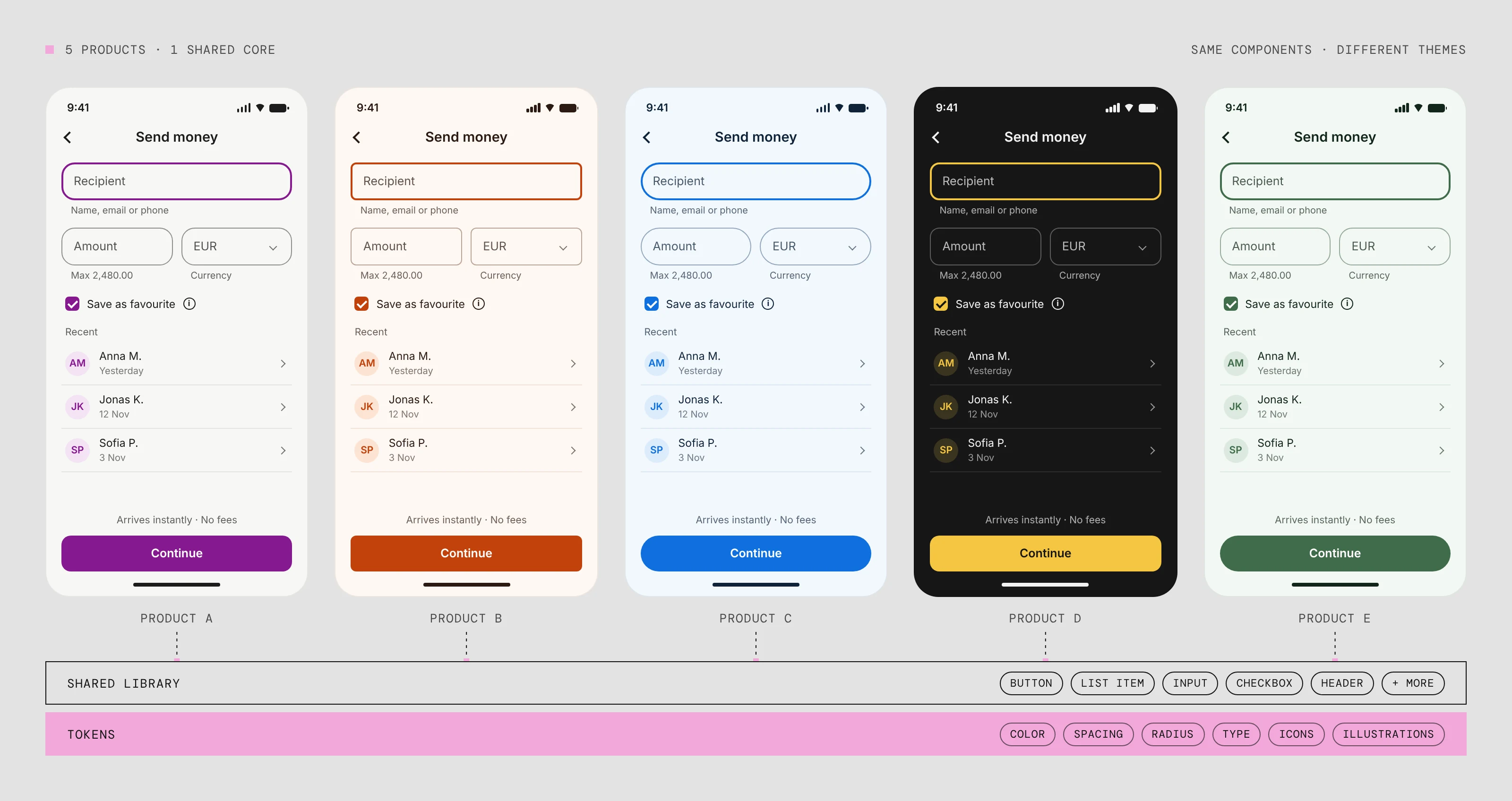
At a glance
The challenge
Each product followed its own rules, or none. Designers kept local components, developers copied legacy code, and users met a different experience in every product.
What I did
Designed the shared architecture, planned the rollout with developers, and brought every brand's stakeholders into the decisions.
The result
One source for design and code. Components are reused instead of rebuilt, changes are made once instead of five times, and the products feel like one family.
Five products, five dialects
On paper, each product was simply its own brand, with its own design system, or none. In practice, the same work was being done again and again. A designer on one product could spend days on a component that another product had already designed, tested and built. Code had its own version of the problem: components were copied, not shared, so a single change meant a developer finding and updating every clone, product by product.
Product and development teams felt it most. Their limited time went into making the same change again and again, and many legacy components were simply left alone for years, because fixing them took too much work and there was never time. That pressure is what finally made the case for one shared system.
“Very long-awaited work. Finally!”
Designing the architecture
Our design manager led the initiative. I was the hands-on designer behind how 5 products would fit into one system: the audit, the architecture, the phasing, and how designers and developers would adopt it. I worked closely with developers, peer designers and stakeholders from each brand along the way.
A system with four kinds of users
A design system has more than one kind of user, and each one needed something different. End users needed one familiar behavior across every product, so they could learn it once instead of being surprised each time they switched. Designers needed components that make the right choice the easy one. Developers needed one shared codebase instead of copies to keep in sync. And brand stakeholders needed their brand to stay recognizable. Behind all four sat the business, paying for uneven quality and for every company-wide change repeated brand by brand.
Share by default, differ on purpose
Together with designers and developers, we audited every brand and mapped where they matched and where they differed. That map shaped a layered architecture:
- TokensThe foundation: color, spacing, radius, typography, icons and illustrations.
- Shared libraryMost components, built once and used by every brand.
- Brand themesIdentity through values, applied on top of the shared components.
- ExceptionsA deliberately small set of brand-specific components, kept outside the main library.
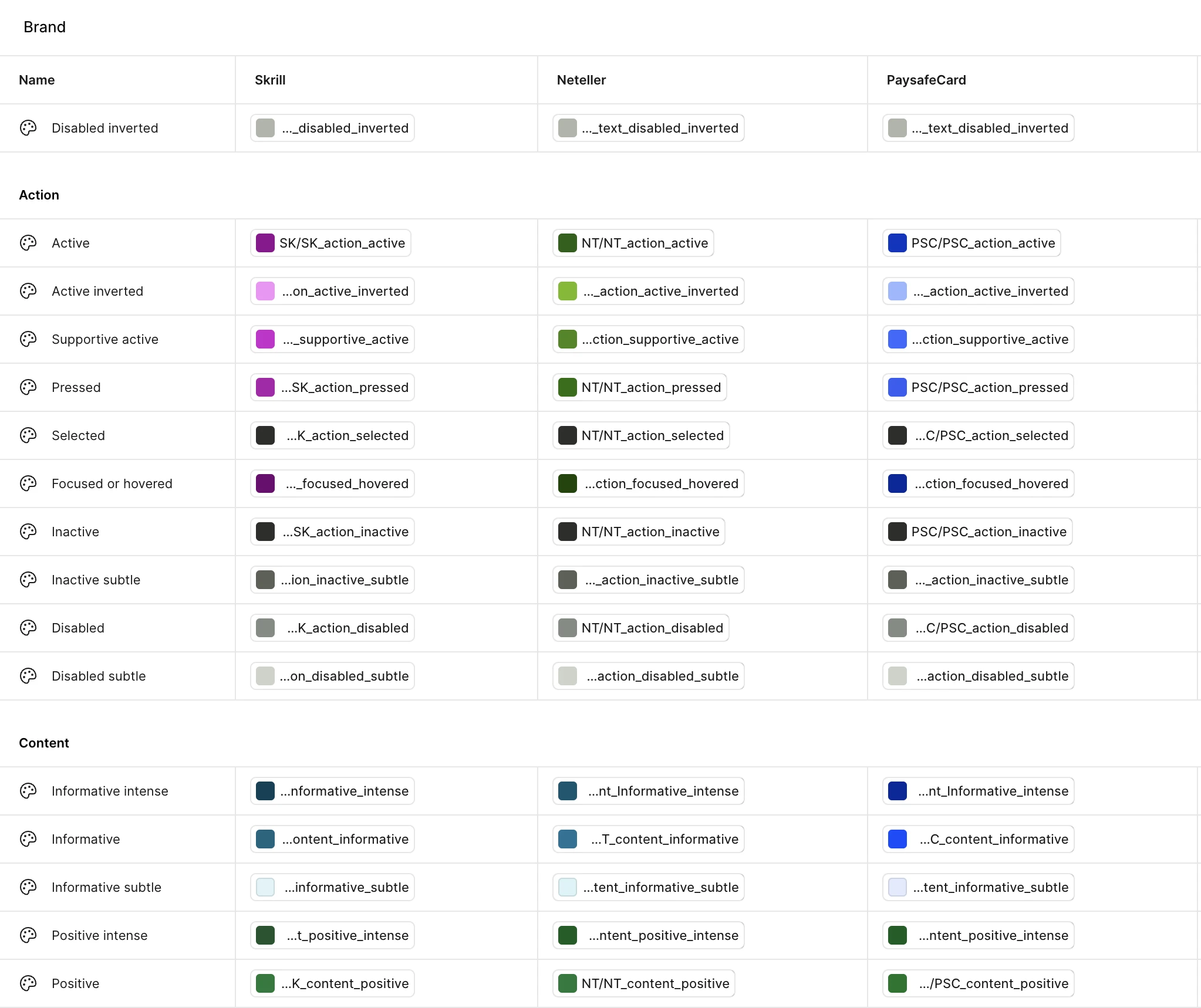
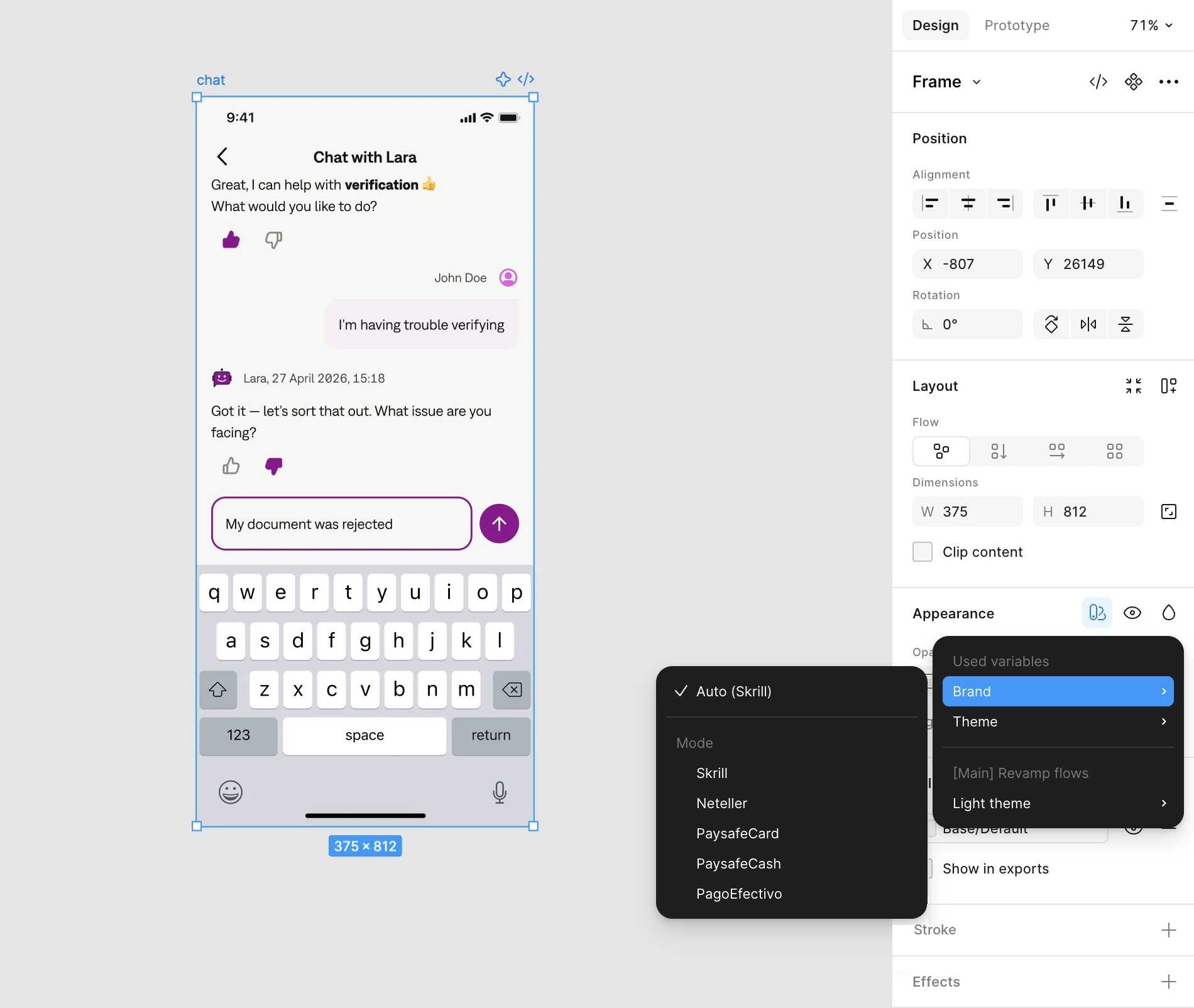
Deciding what belonged in the shared core was the hardest part. We settled on two simple rules: if a component behaved the same way everywhere, it was shared, and only its look changed through tokens. And anything more than one product needed went into the shared library.
List items tested those rules more than anything else. Every designer had built them to their own taste, so each brand had its own version, and together they were a mess. The longest discussions, at every level, were about how many of those nuances we could remove, and whether a brand's version could change to match the others when there was no real need for it to be different. No other component took as much time.
We started the rollout with the second most mature product in design system terms, so the shared core was tested on solid ground first. Every change was planned per brand: when it would land, what it replaced, and how developers would bring it into code. We brought key stakeholders from each brand into the unification decisions, so changes were agreed rather than imposed.
One family, finally
5 products now share one core, with one source for design and code. Components are reused instead of rebuilt, and a change is made once, not five times. Developers no longer hunt down copies across products. They update a single component, and every product inherits it. The legacy components that sat untouched for years are now being retired gradually, product by product, as teams work on those areas.
Design and development moved forward together, too. Because the system mirrors the code, designers and developers now share one structure and one vocabulary. New components follow one shared process, with designers, developers and product taking each idea from the first sketch to release. I consult designers along the way: whether something that already exists can be used or enhanced for the new need, and whether a new component is worth adding to the system at all. As a result, design decisions are made much faster.
For the people using our products, it all adds up to one consistent, predictable experience, whichever brand they're in. And the shared core makes company-wide changes, like the next rebrand, far smoother.
What stayed with me
A shared core holds when every brand helped shape it.
Keep exceptions deliberate. A small, intentional set of brand-specific components kept the core clean.
Agree, don't impose. Bringing each brand's stakeholders into the unification decisions made the changes stick.
Phase it brand by brand. Planning each change per brand kept products shipping while the shared core grew.
Next time: rules before debates. I'd set most of the share-vs-keep rules before the discussions start, so decisions come faster.